
This post may contain affiliate links. As an Amazon Associate, we earn from qualifying purchases. We only recommend products we trust.
This elegant Lemon Posset is a silky-smooth British dessert that requires just 3 ingredients and 5 minutes on the stove! Fresh lemon juice transforms heavy cream into a luxurious, spoonable custard without eggs or gelatin—it’s pure kitchen magic. Serve this classic English dessert in delicate ramekins, hollowed lemon cups, or champagne flutes for an impressive make-ahead dessert that tastes like you spent hours in the kitchen.
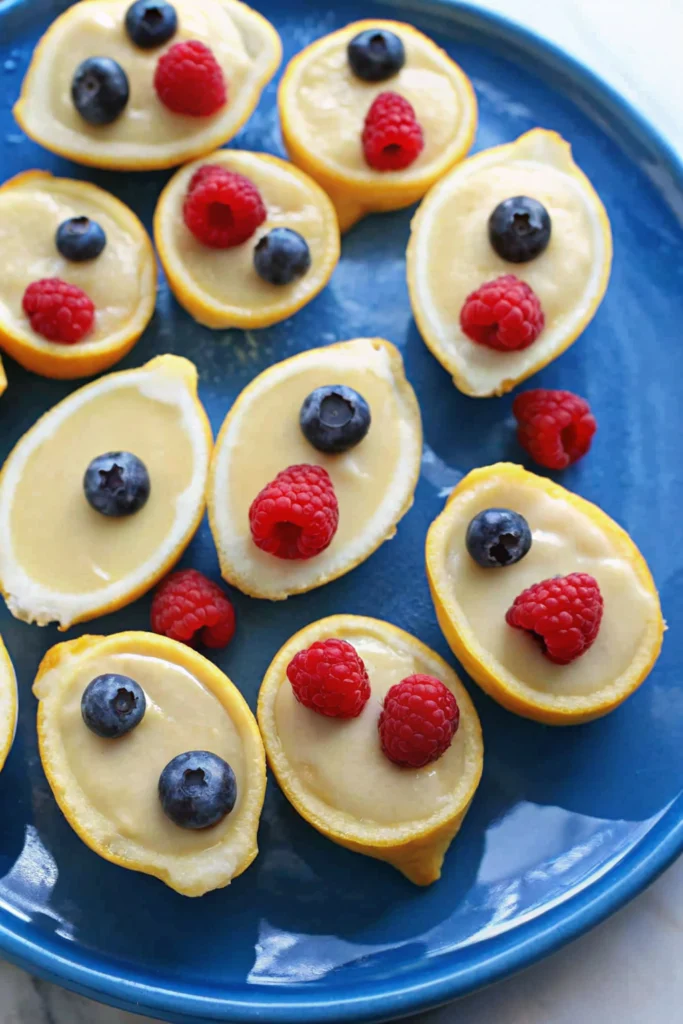
Lemon posset has graced royal tables for centuries, rumored to be one of Queen Elizabeth II’s favorite desserts and even served at her wedding. This no-bake lemon dessert delivers sophisticated flavor with minimal effort—the acid in fresh lemon juice reacts with the cream to create a perfectly set custard that’s tangy, sweet, and utterly addictive.
Whether you’re hosting an elegant dinner party, celebrating a special occasion, or simply craving a refreshing citrus dessert, this easy posset recipe never fails to impress. The smooth, velvety texture rivals panna cotta, while the bright lemon flavor provides the perfect palate cleanser after a rich meal.
Table of Contents
Why You’ll Love Lemon Posset
Ridiculously Simple: Just 3 ingredients (cream, sugar, lemon juice) and 5 minutes of active cooking time create restaurant-quality dessert. No tempering eggs, no gelatin blooming, no complicated techniques!
No-Bake Convenience: After 5 minutes on the stovetop, this no-bake lemon dessert sets up perfectly in the refrigerator. No oven required—perfect for hot summer days or when your oven is occupied.
Make-Ahead Friendly: Prepare up to 3 days ahead and refrigerate until serving time. This is the ultimate stress-free entertaining dessert that actually improves with resting time as flavors meld.
Sophisticated Presentation: Whether served in elegant ramekins, hollowed lemon shells, or crystal dessert cups, lemon posset looks impressive and refined—perfect for dinner parties or special celebrations.
Bright, Refreshing Flavor: The intense lemon flavor is tangy but perfectly balanced with sweetness. It’s a palate-cleansing light dessert that doesn’t feel heavy after a big meal.
Naturally Gluten-Free: This gluten-free dessert is perfect for guests with dietary restrictions, and it’s so delicious nobody will guess it’s naturally gluten-free.
Royal Pedigree: Impress guests with the fact that this was one of Queen Elizabeth II’s favorite desserts—served at her wedding and throughout her reign. You’re serving royalty-approved cuisine!
Versatile and Customizable: While lemon is classic, the base recipe adapts beautifully to other citrus fruits, berries, or flavor additions for endless variations.
What is Lemon Posset? (History and Definition)
Lemon posset is a traditional British dessert dating back to medieval times, originally created as a hot, spiced milk drink curdled with ale or wine. Over centuries, it evolved into the chilled, set custard we know today—a transformation from medicinal tonic to elegant dessert.
The modern posset emerged in the 17th and 18th centuries when cooks discovered that citrus juice could set cream into a smooth custard without eggs or gelatin. The acid in lemon juice denatures the proteins in cream, creating a stable gel structure that’s firm enough to eat with a spoon but still luxuriously creamy.
Posset vs. Similar Desserts:
vs. Panna Cotta:
Panna cotta uses gelatin to set sweetened cream, while posset relies on acid. Posset has a slightly denser, more custardy texture and tangy flavor.
vs. Lemon Curd:
Lemon curd contains eggs and butter, requiring careful tempering. Posset is eggless and simpler, with a lighter, airier texture.
vs. Mousse:
Mousse incorporates whipped cream or egg whites for airiness. Posset is denser and smoother without incorporated air.
vs. Pudding:
Pudding uses cornstarch or eggs as thickeners. Posset thickens naturally through acid-cream interaction.
The beauty of posset is its simplicity—minimal ingredients creating maximum elegance!
Ingredients for Lemon Posset
This 3-ingredient dessert uses simple components, but quality matters enormously:
Core Ingredients:
- 2 cups Heavy Whipping Cream (480ml): This MUST be heavy cream with 36-40% milk fat. Do not substitute with light cream, half-and-half, or milk—they lack the fat content needed to set properly. Best brands: Organic Valley, Horizon Organic, Land O’Lakes, or local dairy cream.
- ⅔ cup Granulated Sugar (133g): White granulated sugar dissolves completely when heated and provides clean sweetness that doesn’t compete with the lemon flavor. You can reduce to ½ cup if you prefer less sweet, but don’t eliminate entirely—sugar affects texture.
- 5 Tablespoons Fresh Lemon Juice (75ml): Use fresh-squeezed lemon juice only—never bottled! You’ll need about 3 medium lemons. Fresh juice provides bright flavor and the right acidity level (pH 2-2.5) for proper setting. Meyer lemons create a sweeter, more floral posset.
Optional Garnishes:
- Fresh berries (raspberries, blueberries, blackberries)
- Thin lemon slices or twists
- Fresh mint leaves
- Candied lemon peel
- Homemade whipped cream
- Shortbread cookies for serving
Best Lemon Selection:
For Juice: Look for heavy, thin-skinned lemons that give slightly when squeezed—they’re juicier. Avoid thick-skinned, firm lemons which are dry inside.
Varieties:
- Eureka/Lisbon lemons (standard grocery store): Tart, reliable
- Meyer lemons: Sweeter, more floral, less acidic (may need extra juice)
- Organic lemons: Essential if using zest as garnish
Pro Tip: Room temperature lemons yield more juice than cold ones. Roll firmly on the counter before cutting to break internal membranes.
Step-by-Step Instructions: How to Make Lemon Posset
This easy British dessert comes together in just 15 minutes of hands-on time!
Step 1: Prepare Serving Vessels
Before you begin cooking, prep your serving vessels. You’ll need:
- 6 small ramekins (4-6 oz each), OR
- 10-12 hollowed lemon cups, OR
- 6 champagne flutes or dessert glasses
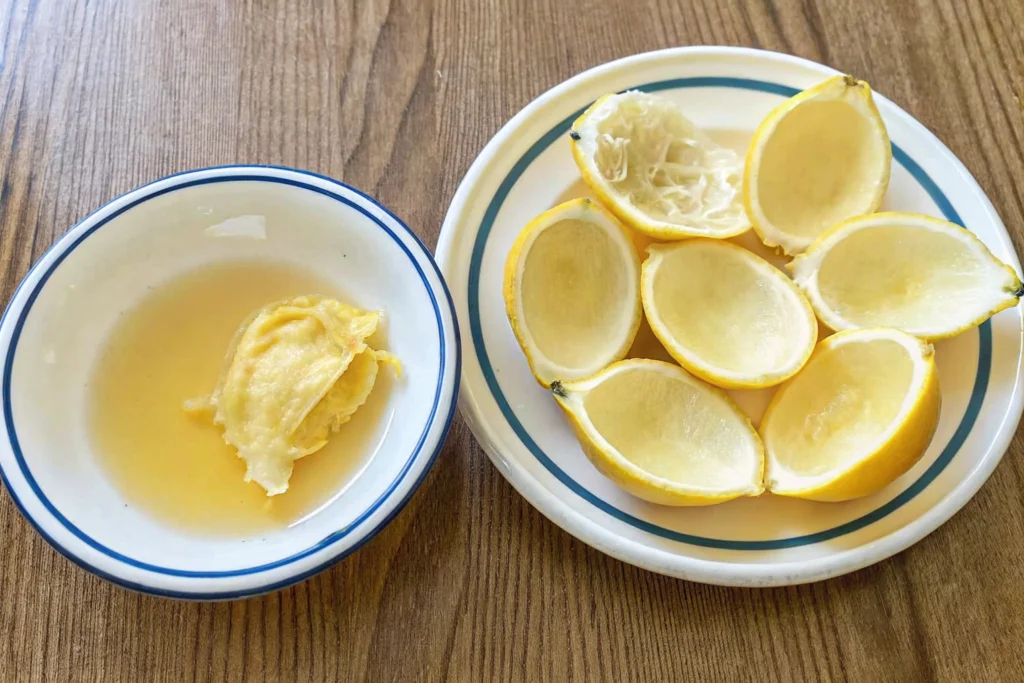
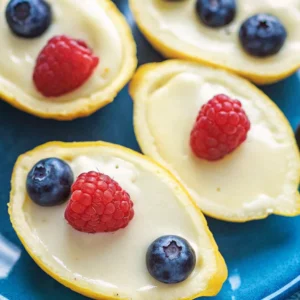
To make lemon cups: Cut 5-6 lemons in half lengthwise. Using a spoon, scoop out all pulp and membrane. Strain the pulp through a fine-mesh sieve to extract juice for the recipe—you should get about 5 tablespoons total.
Place your serving vessels on a rimmed baking sheet for easy refrigerator transport.
Pro Tip: If serving in lemon cups, slice a tiny bit off the bottom of each lemon half so they sit flat without tipping.
Step 2: Heat Cream and Sugar
In a medium heavy-bottomed saucepan (2-quart capacity), combine:
- 2 cups heavy whipping cream
- ⅔ cup granulated sugar
Place over medium-high heat, stirring frequently with a wooden spoon or silicone spatula to dissolve the sugar completely.
Watch carefully as the mixture heats—you want steady, gentle stirring to prevent scorching on the bottom.
Step 3: Bring to a Boil
Continue heating, stirring occasionally, until the mixture comes to a full rolling boil. You’ll see large bubbles breaking the surface across the entire pan—not just around the edges.
Once boiling, reduce heat to medium to prevent boiling over. The cream can bubble up dramatically when it reaches a boil, so watch carefully!
Important: Don’t walk away during this step. Boiling cream can overflow quickly.
Step 4: Simmer for 5 Minutes
Maintain a steady, medium boil for exactly 5 minutes, stirring occasionally. This reduces the cream slightly (about ¼ cup will evaporate), which concentrates the flavor and helps achieve the perfect set texture.
Set a timer! The 5-minute simmer is crucial—too short and the posset may not set properly; too long and it becomes too thick.
During this time, the mixture will thicken slightly and turn a pale ivory color.
Step 5: Add Lemon Juice
Remove the pan from heat immediately after the 5-minute simmer.
Add 5 tablespoons fresh lemon juice all at once.
Whisk vigorously for 30 seconds until the lemon juice is fully incorporated. The mixture will thin slightly when you first add the juice—this is normal!
You may notice tiny specks of curdled protein—don’t worry, the next step fixes this.
Pro Tip: Add the juice off-heat to prevent the cream from over-curdling or breaking.
Step 6: Cool and Strain
Set the pan aside and let the mixture cool at room temperature for 15 minutes. This cooling period allows the proteins to relax after cooking.
After cooling, set a fine-mesh sieve over a large measuring cup with a pouring spout (4-cup capacity).
Pour the posset mixture through the sieve, using a spatula to press any thicker portions through. This creates the signature silky-smooth texture by removing any small curdled bits.
Pro Tip: Don’t skip the straining! It transforms good posset into extraordinary posset.
Step 7: Fill Serving Vessels
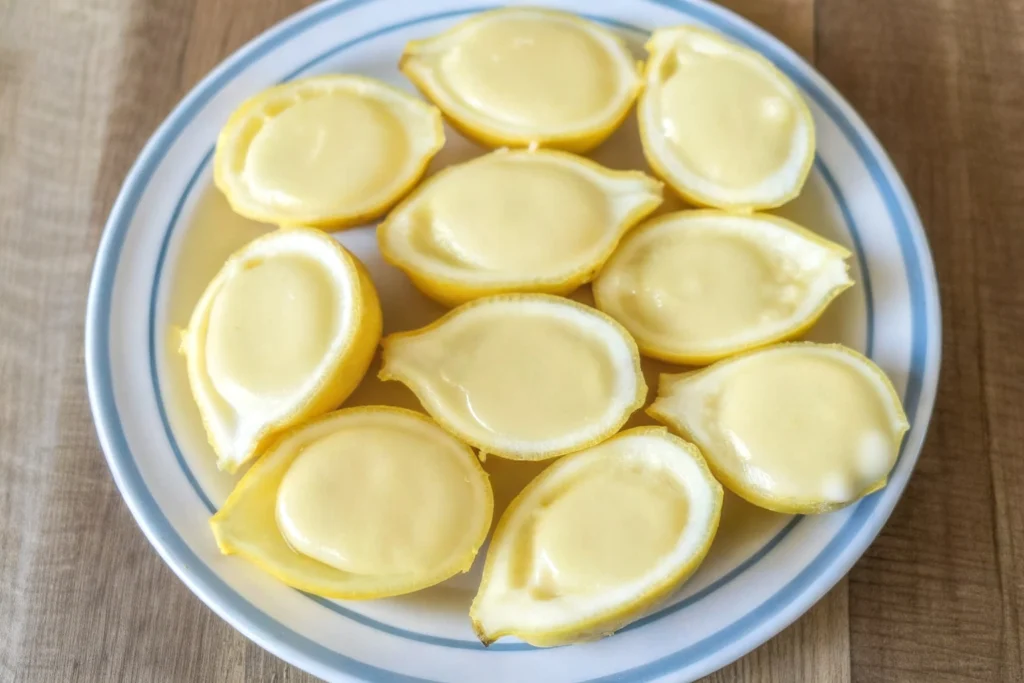
Carefully pour the strained posset into your prepared serving vessels, filling each about ¾ inch deep (or ⅔ full).
Don’t overfill! Posset that’s too deep (over 1 inch) may not set properly in the center.
If you have leftover mixture, pour into an extra ramekin or small jar rather than overfilling.
Pro Tip: A large measuring cup with a spout makes pouring neat and prevents spills.
Step 8: Chill Until Set
Carefully transfer the baking sheet with filled vessels to the refrigerator.
Chill uncovered for at least 2 hours until completely set. The posset should wobble slightly when gently shaken but hold its shape.
For best results, chill 4-6 hours or overnight. This allows full setting and flavor development.
After the posset is fully set (after 2+ hours), cover with plastic wrap if storing longer to prevent absorbing refrigerator odors.
Step 9: Garnish and Serve
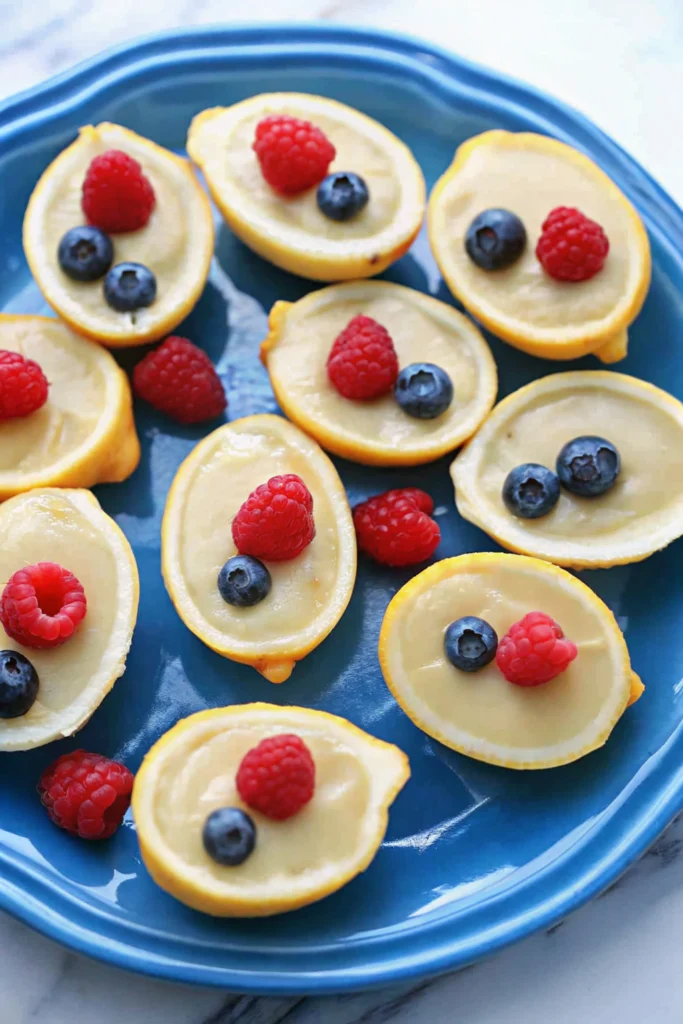
Just before serving, add your chosen garnishes:
- Fresh berries arranged on top
- Thin lemon slice or twist
- Small dollop of whipped cream
- Sprig of fresh mint
- Dusting of powdered sugar
Serve chilled directly from the refrigerator for best texture.
Pro Tip: Lemon posset tastes best when well-chilled. The cold temperature enhances the refreshing lemon flavor.
The Science: Why Posset Sets Without Eggs or Gelatin
Understanding the chemistry makes you a better cook! Here’s the fascinating science behind lemon posset:
The Acid-Protein Reaction:
Heavy cream contains casein proteins suspended in milk fat and water. Normally, these proteins repel each other and stay suspended.
When you add acidic lemon juice (pH 2-2.5) to cream, it lowers the pH dramatically. At lower pH levels, casein proteins lose their negative charge and can no longer repel each other. They begin to bond together, forming a three-dimensional protein network.
Why Heating Matters:
Heating the cream to boiling serves two purposes:
- Denatures proteins: Heat unfolds protein structures, making them more reactive to acid
- Evaporates water: Reducing cream by about 15-20% concentrates proteins and fat for firmer set
The Fat Factor:
Heavy cream’s 36-40% fat content is essential. The fat molecules get trapped in the protein network, creating the rich, creamy texture. Lower-fat creams don’t have enough fat to create the luxurious mouthfeel.
Why It Doesn’t Curdle Like Milk:
Milk curdles unpleasantly when acidified because it lacks sufficient fat. Heavy cream’s high fat content prevents grainy curdling, instead creating a smooth gel.
The Perfect Ratio:
The ratio of cream to lemon juice (about 6:1) provides enough acid to set the proteins without over-curdling or creating a grainy texture. Too much acid = grainy. Too little = won’t set.
This is pure kitchen chemistry magic!
Pro Tips for Perfect Lemon Posset Every Time
Use HEAVY Cream Only: This recipe fails with light cream, half-and-half, or milk. Check the label—it must say “heavy whipping cream” with at least 36% milk fat. Non-negotiable!
Fresh Lemon Juice is Essential: Bottled lemon juice has inconsistent acidity and dull flavor. It may not set properly. Always use fresh-squeezed juice from real lemons.
Measure Lemon Juice Precisely: Too little juice = won’t set. Too much = grainy texture. Use measuring spoons for the exact 5 tablespoons.
Don’t Skip the 5-Minute Simmer: This reduction time is crucial for proper setting. Set a timer and maintain a steady boil for the full 5 minutes.
Strain for Silky Texture: Even if your mixture looks smooth, strain it! This removes microscopic protein clumps for restaurant-quality texture.
Don’t Overfill Vessels: Keep depth under 1 inch for reliable setting. Deeper possets may stay soft in the center.
Chill Fully Before Judging: If your posset seems soft after 2 hours, give it more time. Some batches need 4-6 hours depending on refrigerator temperature and serving vessel material.
Adjust Sweetness to Taste: The standard recipe is pleasantly sweet-tart. Reduce sugar to ½ cup for more pucker, or increase to ¾ cup for dessert-wine sweetness.
Room Temperature Matters: Let posset sit at room temperature for 5-10 minutes before serving for optimal flavor and texture.
Creative Variations for Lemon Posset
Lime Posset (Key Lime Style):
Replace lemon juice with fresh lime juice (you’ll need 5-6 limes). Add ½ teaspoon lime zest to the finished mixture before straining. Garnish with lime slices and whipped cream for a Key Lime Pie flavor!
Orange Posset:
Use 4 tablespoons orange juice plus 1 tablespoon lemon juice (orange alone doesn’t have enough acid to set). Add ½ teaspoon orange zest. Garnish with candied orange peel.
Blood Orange Posset:
During blood orange season (December-March), use 5 tablespoons blood orange juice. The stunning pink-orange color is breathtaking! May need an extra tablespoon juice due to lower acidity.
Lemon-Lavender Posset:
Add 1 teaspoon dried culinary lavender to the cream and sugar before heating. Strain out lavender with the posset mixture. The floral notes create an elegant, sophisticated dessert.
Lemon-Berry Posset:
Fold ¼ cup raspberry or blueberry purée into the cooled (but not set) posset before pouring into vessels. Swirl gently with a knife for a marbled effect.
Lemon-Elderflower Posset:
Add 2 tablespoons elderflower cordial (St. Germain) to the cream mixture before heating. Reduce sugar to ½ cup. Very British and very elegant!
Lemon-Ginger Posset:
Add 1 tablespoon finely grated fresh ginger to cream before heating. Strain out ginger pieces. The warmth complements the lemon beautifully.
Lemon-Basil Posset:
Infuse cream with 6-8 torn basil leaves while heating. Remove leaves before adding lemon juice. Garnish with tiny basil leaves for a savory-sweet profile.
Meyer Lemon Posset:
Use Meyer lemons for sweeter, more floral flavor. You may need 6 tablespoons juice since Meyers are less acidic. The delicate flavor is perfect for spring!
Boozy Lemon Posset (Adult Version):
Add 2 tablespoons limoncello to the finished mixture before straining. Reduce sugar to ½ cup. Not for children, but divine for dinner parties!
How to Store and Make-Ahead Lemon Posset
Refrigerator Storage:
Short-term (Day of serving): Keep uncovered in refrigerator until serving time.
Longer storage (2-3 days): Once fully set, cover each vessel with plastic wrap to prevent absorbing refrigerator odors. Store up to 3 days for best quality.
Extended storage (up to 1 week): Some cooks successfully store posset for up to 7 days, though quality gradually declines. You may notice:
- Slight liquid condensation on top (drain before serving)
- Flavor becoming slightly less bright
- Texture becoming slightly firmer
Pro Tip: Always smell and taste before serving if stored longer than 3 days.
Can You Freeze Lemon Posset?
Not recommended. Freezing destroys the delicate protein gel structure. Upon thawing, posset becomes grainy, icy, or separated. The texture is completely ruined.
If you must freeze, the thawed posset can be whisked vigorously and used as a sauce for cakes or berries, but it won’t hold its shape.
Make-Ahead Timeline:
Perfect Make-Ahead Schedule:
3 days before: Make posset, portion into vessels, chill
2 days before: Posset is perfectly set, cover with plastic
Day of serving: Add garnishes, serve chilled
This timeline makes posset ideal for stress-free entertaining!
Last-Minute Timeline:
Morning of dinner party: Make posset
2+ hours before serving: Posset should be set
Just before serving: Add garnishes
Even last-minute, this works beautifully!
Serving and Presentation Ideas for Lemon Posset
Elegant Presentation Vessels:
Classic Ramekins: White porcelain ramekins (4-6 oz) showcase the pale yellow color beautifully. Le Creuset, Sur La Table, or IKEA make affordable options.
Lemon Cups: Hollowed lemon halves create charming, edible vessels. Save time by scooping carefully to avoid piercing the peel.
Champagne Flutes: Clear glass shows off the color and creates height for elegant table settings.
Tea Cups: Vintage tea cups add whimsical charm for afternoon tea service.
Mason Jars: Small 4-oz jars work for casual gatherings or picnic desserts.
Martini Glasses: For dramatic presentation at cocktail parties.
Garnish Ideas:
Fresh Berries:
- Raspberries (classic pairing)
- Blueberries (color contrast)
- Blackberries (sophisticated)
- Strawberry slices (sweet balance)
Citrus Accents:
- Thin lemon slices
- Lemon twists (fancy!)
- Candied lemon peel
- Lemon zest curls
Cream & Cookies:
- Dollop of whipped cream
- Shortbread cookies for dipping
- Vanilla wafer crumbs
- Crushed gingersnaps
Herbs & Florals:
- Fresh mint sprigs
- Edible flowers (violas, pansies)
- Candied violets
- Thyme flowers
Party Serving Suggestions:
Dinner Party (6-8 guests):
Serve in elegant ramekins, garnished with single raspberry and mint leaf. Present on individual dessert plates with a shortbread cookie alongside.
Afternoon Tea:
Portion into teacups, serve with delicate spoons. Accompany with scones and finger sandwiches.
Bridal/Baby Shower:
Use lemon cups for adorable presentation. Arrange on tiered stand with fresh flowers between layers.
Summer Garden Party:
Serve in small mason jars with striped straws and berry garnish. Can be eaten with spoons or sipped if made slightly thinner.
Romantic Dinner:
Two portions in champagne flutes, garnished with rose petals and gold leaf for luxury.
Portion Sizes:
Standard serving: ½ cup (4 oz) – perfect after a full meal
Generous serving: ¾ cup (6 oz) – for posset as main dessert
Tasting portion: ¼ cup (2 oz) – for dessert buffets with multiple options
This recipe (2½ cups total) yields:
- 6 standard servings (½ cup each)
- 10-12 small lemon cups (¼ cup each)
- 4 generous servings (⅔ cup each)
Lemon Posset
Equipment
- Medium saucepan
- Whisk or spatula
- Fine-mesh sieve
- ramekins
Ingredients
- 2 cups heavy whipping cream (36–40% fat)
- 0.66 cup granulated sugar
- 5 tbsp fresh lemon juice
Instructions
- In a medium saucepan, combine heavy cream and sugar. Heat over medium-high, stirring until sugar fully dissolves.
- Bring mixture to a full rolling boil, then reduce heat and simmer for exactly 5 minutes, stirring occasionally.
- Remove from heat and immediately whisk in fresh lemon juice for 30 seconds until fully incorporated.
- Let mixture cool at room temperature for 15 minutes.
- Strain through a fine-mesh sieve into a measuring cup for a smooth texture.
- Pour into ramekins or lemon cups, filling about two-thirds full.
- Refrigerate for at least 2–4 hours (preferably longer) until set. Serve chilled with optional garnishes.
Notes
Frequently Asked Questions About Lemon Posset
Q: Can I use half-and-half or light cream instead of heavy cream?
A: No! Heavy cream with 36-40% milk fat is absolutely essential. Lower-fat creams don’t have enough fat or protein to set properly. The posset will remain liquid or develop a grainy texture. There’s no successful substitution—heavy cream is non-negotiable.
Q: Why didn’t my lemon posset set?
A: Common causes:
- Used light cream instead of heavy cream
- Didn’t boil for full 5 minutes (cream wasn’t reduced enough)
- Used bottled lemon juice instead of fresh (wrong acidity level)
- Didn’t use enough lemon juice (need exactly 5 tablespoons)
- Didn’t chill long enough (needs minimum 2 hours, often 4+)
Fix: If still liquid after 4 hours, add 1 more tablespoon lemon juice, return to pan, boil 2 more minutes, cool, strain, and re-chill.
Q: Can I make lemon posset dairy-free?
A: Unfortunately, no. Coconut cream doesn’t set the same way because plant-based proteins don’t react to acid like dairy proteins. You can try full-fat coconut cream for a pudding-like consistency, but it won’t firm up into true posset texture.
Q: My posset has a grainy texture. What happened?
A: This happens when:
- Cream was overheated (curdled too aggressively)
- Too much lemon juice was used
- Mixture wasn’t strained properly
Prevention: Use exact measurements, don’t overheat, and always strain through fine-mesh sieve.
Q: Can I use Meyer lemons?
A: Yes! Meyer lemons are sweeter and less acidic than regular lemons. You may need 6 tablespoons Meyer lemon juice instead of 5 to achieve proper set. The flavor will be more delicate and floral—absolutely delicious!
Q: How far in advance can I make lemon posset?
A: Make up to 3 days ahead for optimal quality. Store covered in refrigerator. Add garnishes just before serving. While it can technically last up to a week, flavor and texture are best within 3 days.
Q: Can I double or triple this recipe?
A: Absolutely! This recipe scales perfectly. Use a larger pot to prevent boiling over. All measurements increase proportionally:
- Double: 4 cups cream, 1⅓ cups sugar, 10 Tbsp lemon juice
- Triple: 6 cups cream, 2 cups sugar, 15 Tbsp lemon juice (about ¾ cup + 3 Tbsp)
Q: What’s the difference between posset and panna cotta?
A: Posset sets using acid (lemon juice) and has tangy flavor. Panna cotta sets using gelatin and has neutral, creamy flavor. Posset is slightly denser; panna cotta is more delicate and can be unmolded. Both are elegant no-bake desserts!
Q: Can I add food coloring?
A: You can, though it’s unnecessary—the natural pale yellow from lemon juice is lovely. If desired, add 1-2 drops yellow gel food coloring after adding lemon juice for brighter color.
Q: My posset separated with liquid on top. Is it ruined?
A: A small amount of clear liquid (whey) separation is normal, especially after 3+ days storage. Simply drain off the liquid before serving. If there’s significant separation, the posset may have been over-acidified or stored too long.
Q: Can I make individual servings in advance for a large party?
A: Yes! This is posset’s superpower. Make all portions 1-2 days ahead, cover with plastic wrap, refrigerate. On party day, simply unwrap, garnish, and serve. Perfect for stress-free entertaining!
Q: What can I do with leftover lemon posset?
A:
- Use as filling for tarts or tartlets
- Layer in parfaits with granola and berries
- Spoon over pound cake or angel food cake
- Mix with whipped cream for lighter mousse-like texture
- Dollop onto fresh fruit salad
Q: Is lemon posset safe for pregnant women?
A: Yes! Since posset contains no raw eggs and uses pasteurized heavy cream, it’s perfectly safe during pregnancy. The high acid content also provides some natural preservation.
Why This Is the Best Lemon Posset Recipe
This lemon posset recipe represents centuries of British culinary refinement distilled into one perfect formula. What makes it truly special is the precise balance of cream, sugar, and lemon juice that creates that magical set without any gelling agents.
Unlike recipes that take shortcuts or use alternative thickeners, this authentic British posset relies on pure chemistry—the elegant interaction of dairy proteins and citrus acid. The result is a dessert that’s simultaneously rich and refreshing, sophisticated yet simple, impressive yet effortless.
The 5-minute simmer time isn’t arbitrary—it’s the exact reduction needed to concentrate cream to optimal thickness. The exact ratio of 2 cups cream to 5 tablespoons lemon juice creates perfect tang without graininess. The straining step transforms good posset into extraordinary posset.
Whether you’re recreating a taste of royal British tradition, impressing dinner guests, or simply enjoying a refined make-ahead dessert, this lemon posset delivers every time. It’s proof that the best recipes often require the fewest ingredients—when technique and quality ingredients combine, magic happens.
More Elegant No-Bake Desserts
Once you’ve mastered lemon posset, try these other refined no-bake desserts:
- Panna Cotta: Italian cream dessert set with gelatin
- Tiramisu: Coffee-soaked ladyfingers with mascarpone
- Chocolate Mousse: Light, airy chocolate indulgence
- Eton Mess: British berries, cream, and meringue
- Crème Brûlée: Torch-topped custard (technically baked)
- Syllabub: Posset’s cousin with wine or sherry
- Lemon Mousse: Lighter, airier lemon dessert
- Bavarian Cream: Custard lightened with whipped cream
The no-bake technique you’ve mastered with posset opens doors to countless elegant desserts perfect for entertaining!