
This post may contain affiliate links. As an Amazon Associate, we earn from qualifying purchases. We only recommend products we trust.
Achieving perfectly tender, creamy Acorn Squash that is soft enough to eat with a spoon often feels elusive—many recipes leave the edges dry or stringy. This method, often called the water bath method, solves that problem entirely. By baking the squash cut-side down on a pan filled with water, we use gentle steam to cook the squash uniformly, locking in moisture and guaranteeing a soft, non-stringy interior.
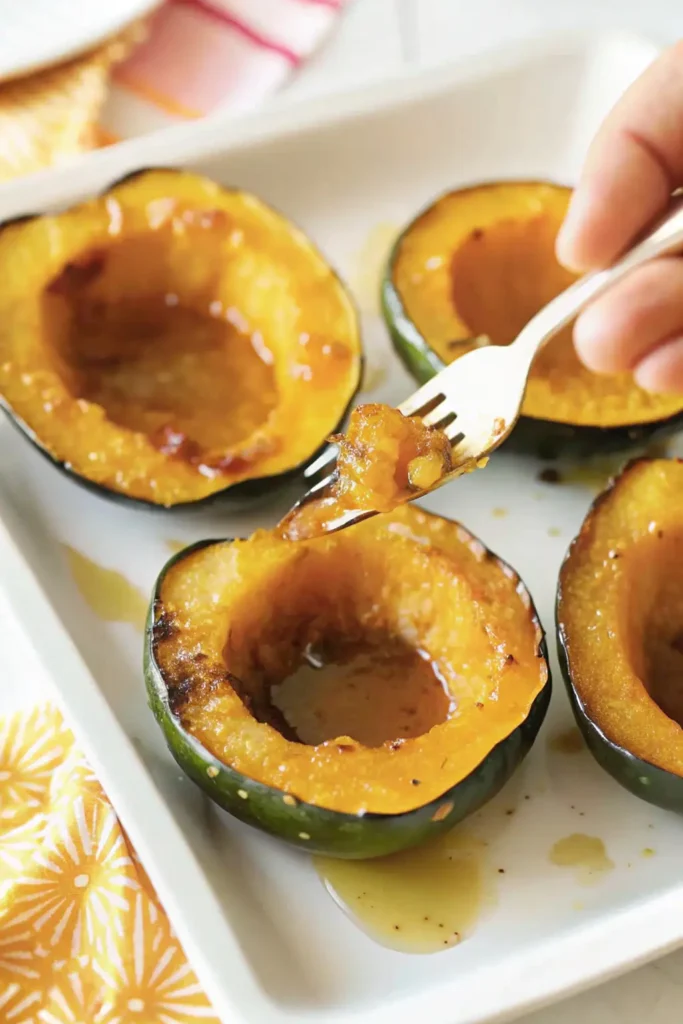
The process is simple: steam-bake the squash until tender, then flip, add a generous pat of brown sugar and butter, and quickly broil for a beautiful, caramelized glaze. This is the best way to cook acorn squash, yielding a delicious and elegant easy holiday side dish that showcases the natural sweet flavor of the squash, enhanced by that classic buttery finish.
Table of Contents
Why You’ll Love This Squash
- Guaranteed Softness: The water bath method prevents the flesh from drying out, resulting in truly soft baked acorn squash.
- Perfect Glaze: A final, quick broil melts the brown sugar and butter into a bubbly, caramelized syrup.
- Easy and Affordable: Uses just a handful of simple ingredients and is highly cost-effective, especially during the fall season.
- Versatile Flavoring: Easily adapted from the classic sweet glaze to a savory herb butter.
Ingredients
- 2 Acorn Squash (medium size)
- 4 Tbsp Unsalted Butter, divided
- 2 Tbsp Brown Sugar (or maple syrup), divided
- Salt, to taste
- Black Pepper, to taste
- Water (for the baking sheet)
Instructions (Step-by-Step)
- Prep Squash: Preheat your oven to 350°F (175°C). Wash and dry the acorn squash. Using a sharp, sturdy knife, carefully cut each squash in half lengthwise along the ridges. Use a spoon to scrape out all the seeds and stringy pulp.
- Prep Water Bath: Place the squash halves cut side down on a shallow baking sheet or roasting pan. Add enough water to the baking sheet so that it reaches about ¼ inch up the sides of the squash. This water will create the steam needed for the perfect, soft bake.
- Steam-Bake: Place the pan in the preheated oven and bake for 35–40 minutes. The squash is done when the skin is easily pierced with a fork.
- Glaze and Broil: Remove the baking sheet from the oven and carefully pour off the hot water. Turn the oven to the broil setting. Flip the squash halves over.
- Finish Glaze: Place 1 tablespoon of butter in the center cavity of each squash half. Add 1 tablespoon of brown sugar (or maple syrup) to the center of each, and sprinkle with a pinch of salt and pepper.
- Caramelize: Return the pan to the oven (ensure the squash is not too close to the broiler element) and broil for 3–5 minutes. Watch carefully! The butter/sugar will melt, bubble, and lightly caramelize the edges.
- Serve: Remove immediately and serve warm.
Storage and Reheating
- Storage: Store cooled leftovers in an airtight container in the refrigerator for up to 3 days.
- Reheating: Reheat gently in a 350°F (175°C) oven or in a covered dish in the microwave until warm. To prevent drying, add a tiny bit of water or butter to the cavity before reheating.
Expert Tips
- The Water is Critical: The small amount of water on the baking sheet acts as a moisture regulator, preventing the dry oven air from pulling moisture out of the exposed squash flesh. This simple steaming technique is the secret to getting truly soft baked acorn squash.
- Broil with Caution: The broiling step happens very quickly. Keep a close eye on the squash during the final 3–5 minutes, as the sugar can go from caramelized to burned in seconds.
- Don’t Overbake: The squash is ready when it is soft enough to pierce, but not mushy. Overcooking will still break down the flesh too much, so monitor the time closely after 35 minutes.
- Salt Balance: Salt is essential even in this sweet recipe. A small pinch of salt enhances the sweetness and depth of flavor, ensuring the final dish isn’t cloyingly sweet.
Variations
- Maple Glaze: Substitute the brown sugar with 2 tablespoons of pure maple syrup for a pure maple flavor.
- Spicy Glaze: Add a tiny dash of cayenne pepper or a sprinkle of nutmeg and cinnamon to the brown sugar mixture for a warm, spicy twist.
- Savory Version: Skip the brown sugar and instead fill the baked cavity with a tablespoon of butter, minced garlic, dried thyme, and a pinch of Parmesan cheese before broiling.
- Stuffing Base: Skip the broiling. Once the squash is baked, fill the cavity with a hearty stuffing of sausage, wild rice, and mushrooms.
Serving Suggestions
Pair this delicious acorn squash with brown sugar and butter with savory holiday meals:
- Protein: Roasted Turkey, Holiday Ham, or Roast Chicken.
- Starch: Wild Rice Pilaf, Creamy Mashed Potatoes, or Quinoa.
- Balance: A tart cranberry sauce or a simple green salad with vinaigrette.
Frequently Asked Questions
Q: Why do I bake the squash cut side down first? A: Baking the squash cut side down (in the water) creates a steaming environment that locks the moisture inside the flesh, resulting in a soft, non-stringy interior. We flip it only at the end to add the glaze and achieve the crisp, caramelized edges.
Q: Can I use honey instead of brown sugar? A: Yes, honey is a perfect substitute. Use the same amount (2 tablespoons total) and place it in the cavity along with the butter before broiling. Be mindful that honey may caramelize and burn slightly faster than brown sugar, so watch the broiling closely.
Q: I don’t have a broiler. What should I do? A: If you don’t have a broiler, simply turn your oven temperature up to 425°F (220°C) for the final 5–10 minutes after adding the butter and sugar. The high heat will melt the glaze and slightly caramelize the edges, achieving a similar result without the intense broil.
Q: Can I peel the acorn squash? A: No, you should not peel the acorn squash for this recipe. The skin holds the squash in its bowl shape, and it becomes soft enough to eat after the initial steam-bake. Peeling is difficult and unnecessary.

Soft Baked Acorn Squash
Equipment
- Sharp chef’s knife
- Cutting board
- Spoon (for scooping seeds)
- Baking Sheet or Roasting Pan
- Oven with Broiler
Ingredients
- 2 Acorn Squash (medium size)
- 4 Tbsp Unsalted Butter, divided
- 2 Tbsp Brown Sugar or Maple Syrup, divided
- Salt, to taste
- Black Pepper, to taste
- Water (for baking sheet)
Instructions
- Preheat oven to 350°F (175°C). Wash, dry, and carefully cut each squash in half lengthwise along the ridges. Scoop out and discard the seeds and stringy pulp.
- Place the squash halves cut side down on a shallow baking sheet. Add enough water to reach about 1/4 inch up the sides to create steam during baking.
- Bake for 35–40 minutes or until the squash is soft and the skin can be pierced easily with a fork.
- Carefully drain the hot water and flip the squash halves over. Place 1 tablespoon of butter and 1 tablespoon of brown sugar or maple syrup in each cavity. Season with a pinch of salt and pepper.
- Turn the oven to broil. Broil the squash for 3–5 minutes, watching closely until the glaze melts, bubbles, and lightly caramelizes.
- Remove from the oven and serve warm, spooning the melted glaze over the squash flesh.