
This post may contain affiliate links. As an Amazon Associate, we earn from qualifying purchases. We only recommend products we trust.
When the holidays call for an impressive yet stress-free centerpiece, this Ultimate Prime Rib Roast recipe delivers every time. This method, often called the “Low-Roast, Finish-Sear,” is the secret to achieving that coveted, edge-to-edge pink interior with a spectacular, beautifully browned exterior. By using a minimalist seasoning—focusing only on salt, pepper, garlic, and paprika—the rich, beefy flavor of the standing rib roast is allowed to truly shine.
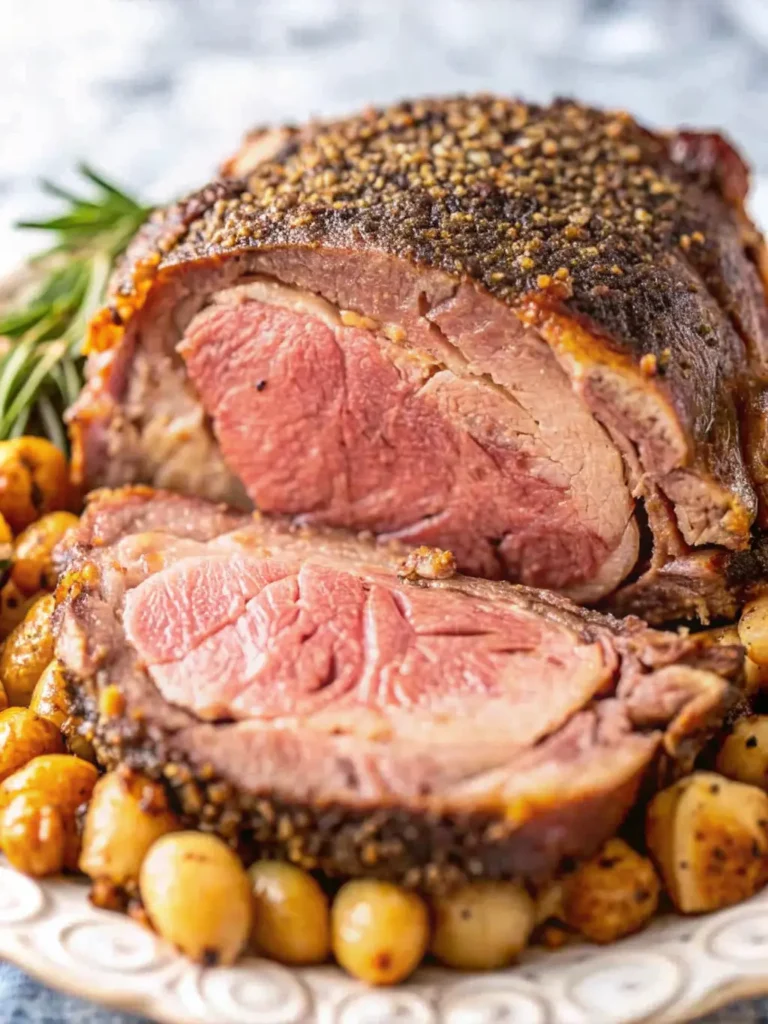
The success of this best prime rib roast recipe lies in the long, slow cook at a low temperature, which cooks the meat evenly, followed by a final, high-temperature sear to create the crispy crust. This technique is easier than you think, especially when paired with a probe thermometer, which ensures precision and eliminates the guesswork often associated with cooking large, expensive cuts of meat.
Table of Contents
Why You’ll Love This Prime Rib
- Flawless Interior: The low-roast, finish-sear method guarantees a uniform, succulent, medium-rare center without the dry, gray edges.
- Crispy Crust: A short burst of high heat at the end creates a crunchy, savory exterior that is irresistible.
- Simple Seasoning: This salt rubbed prime rib recipe uses simple spices, proving that high-quality beef needs minimal interference.
- Make-Ahead Genius: The essential 8–48 hour dry brine significantly reduces stress on the day of your event, making this the ultimate prime rib for entertaining.
Ingredients
- 1 (7–8 pound) Prime Rib Roast (3–4 ribs), bone-in or boneless
- Kosher Salt (approx. ½ tsp per pound, plus extra for initial rub)
- Freshly Ground Black Pepper
- Garlic Powder
- Smoked Paprika
- 1 Tbsp Avocado or Canola Oil (optional, for rubbing)
- Butcher’s Twine (if roast is untied or boneless)
- Brandy Peppercorn Sauce, Horseradish Sauce, or Au Jus (for serving)
Instructions (Step-by-Step)
- Prep and Dry Brine (8–48 Hours Ahead): Pat the roast thoroughly dry with paper towels. Generously rub the entire roast with Kosher salt (use more than you think you need). Place the roast, uncovered, on a wire rack over a rimmed baking sheet. Refrigerate overnight or up to 48 hours. This dry brine tenderizes the meat and enhances the final crust.
- Bring to Room Temperature: 1 hour before cooking, remove the roast from the refrigerator and let it sit at room temperature. Preheat the oven to a low 200°F (93°C).
- Final Seasoning and Roast: Drizzle the roast lightly with oil (if using) and rub it in. Sprinkle the roast generously with black pepper, garlic powder, and smoked paprika. Place the roast on the rack, fat-cap up.
- The Low Roast: Place the roast in the 200°F oven and cook until the center registers 115°F (for rare) or 120°F (for medium-rare). Begin checking the internal temperature at the 3-hour mark and every 15 minutes thereafter.
- Rest and Sear Prep: When the roast hits your target low temperature (e.g., 120°F), remove it and tent it loosely with foil. Allow it to rest for 15–30 minutes. Meanwhile, set the oven to 500°F (260°C).
- The Finish Sear: Remove the foil and place the roast back into the preheated 500°F oven for 6–10 minutes until the exterior is beautifully browned and crispy.
- Slice and Serve: Transfer the roast from the oven, remove the twine, and carve slices against the grain. Serve immediately with sauce.
Internal Temperature Guide (Pull from Oven at This Temp)
| Doneness | Pull from Oven at Low Temp (200°F) | Final Temp (After Sear/Rest) |
| Rare | 115°F (46°C) | 125°F (52°C) |
| Medium-Rare (Recommended) | 120°F (49°C) | 130°F (54°C) |
| Medium | 130°F (54°C) | 135°F (57°C) |
Expert Tips
- Dry Brine is the Secret Weapon: Do not skip the dry brine (salting the meat 8–48 hours in advance). The salt draws out moisture, creating a cleaner, crispier surface and deepening the meat’s flavor.
- The Low-Roast Advantage: Cooking at a low temperature for several hours prevents the meat from overcooking and guarantees a pink, juicy interior right up to the crust—the hallmark of the best prime rib roast recipe.
- Don’t Forget the Rest: The rest time is vital for juiciness. During the 15–30 minutes of resting, the high heat is also being used to prepare the oven for the final 500°F sear.
- Seasoning Intensity: Since the seasoning is simple, ensure you use coarse salt and freshly ground pepper for a more profound flavor and better crust texture.
Variations
- Herb Paste: For a richer flavor, mix the seasonings into 1/4 cup of softened unsalted butter and rub that over the roast before the low cook.
- Smoked Finish: Use smoked paprika as the recipe suggests, or if you have a smoker, finish the roast over high heat on the smoker instead of in the oven.
- Au Jus: Use the pan drippings from the bottom of the roasting pan. Skim the fat and use the remaining savory liquid as your Au Jus for serving.
Serving Suggestions
Pair this ultimate roast with classic holiday sides:
- Potatoes: Scalloped Potatoes, Parmesan Creamed Potatoes, or simple Garlic Mashed Potatoes.
- Vegetables: Creamy Green Beans, Roasted Asparagus, or Garlic Mushrooms.
- Sauces: The traditional pairing is a creamy, fresh Horseradish Sauce or a simple Au Jus.
Frequently Asked Questions
Q: Why do I start cooking the prime rib at such a low temperature (200°F)?
A: Cooking at 200°F is part of the low-roast, finish-sear method. The low temperature allows the meat to cook slowly and evenly to the center without overcooking the outer layers. This prevents the gray, dry band and ensures a uniform pink interior, which is key to the best prime rib roast recipe.
Q: Is it okay to check the temperature multiple times while the oven is set to 200°F?
A: Yes, checking the temperature with a probe thermometer is essential. However, rely on a probe thermometer that stays in the roast and displays the temperature outside the oven. Opening the oven door frequently will cause significant heat loss and extend the total cooking time.
Q: I have a 4-pound roast. How do I adjust the time?
A: A 4-pound roast will cook significantly faster. Begin checking the temperature after about 1 hour and 45 minutes at 200°F. The internal temperature guidelines remain the same, but the total cook time will be about half that of an 8-pound roast.
Q: Why does the recipe call for seasoning 8–48 hours in advance?
A: Seasoning in advance is the dry brine process. The salt draws out moisture, then the salty liquid is reabsorbed into the meat. This process tenderizes the roast, seasons it deeply from within, and helps create a better, crispier crust during the final sear.
Ultimate Prime Rib Roast
Equipment
- Roasting Pan with Rack
- Probe Thermometer (Cabled or Wireless Recommended)
- Wire Rack and Baking Sheet
- Sharp Carving Knife
- Aluminum foil
Ingredients
- 1 (7–8 lb) Prime Rib Roast (3–4 ribs), bone-in or boneless
- ½ tsp per lb Kosher Salt (plus extra for initial rub)
- to taste Freshly Ground Black Pepper
- to taste Garlic Powder
- to taste Smoked Paprika
- 1 Tbsp Avocado or Canola Oil (optional, for rubbing)
- as needed Butcher’s Twine (if roast is untied or boneless)
- to serve Horseradish Sauce, Au Jus, or Peppercorn Sauce
Instructions
- Pat the roast dry with paper towels. Generously rub the entire roast with Kosher salt (about ½ teaspoon per pound). Place it uncovered on a wire rack over a rimmed baking sheet and refrigerate for 8 to 48 hours. This dry brine enhances flavor and crust formation.
- Remove the roast from the refrigerator about 1 hour before cooking. Allow it to come to room temperature for even cooking. Preheat your oven to 200°F (93°C).
- Drizzle the roast lightly with oil (optional) and rub it in. Season generously with black pepper, garlic powder, and smoked paprika. Place the roast fat-side up on a rack in a roasting pan.
- Insert a probe thermometer into the thickest part of the roast. Cook slowly at 200°F until the internal temperature reaches 115°F for rare or 120°F for medium-rare. Start checking at the 3-hour mark, then every 15 minutes.
- Once the roast reaches the target low temperature, remove it from the oven and tent loosely with foil. Let it rest for 15–30 minutes while you preheat the oven to 500°F (260°C).
- Place the roast back in the preheated 500°F oven for 6–10 minutes, just until the exterior is browned and crisp. Watch closely to prevent burning.
- Transfer the roast to a cutting board, remove any twine, and slice against the grain. Serve immediately with your choice of sauce.